By Lakshya Gopal, medical student. Opinion pieces do not necessarily reflect the views of the charity.
In Silent Hill 2, you play as James Sunderland, a man drawn to the titular eerie town by a letter from his deceased wife, who claims to be waiting for him there. As James explores the fog-shrouded town, he encounters strange, unsettling environments, each more disturbing than the last. The game blends exploration, combat, and puzzle-solving—but its true focus lies in James’ emotional and psychological descent.
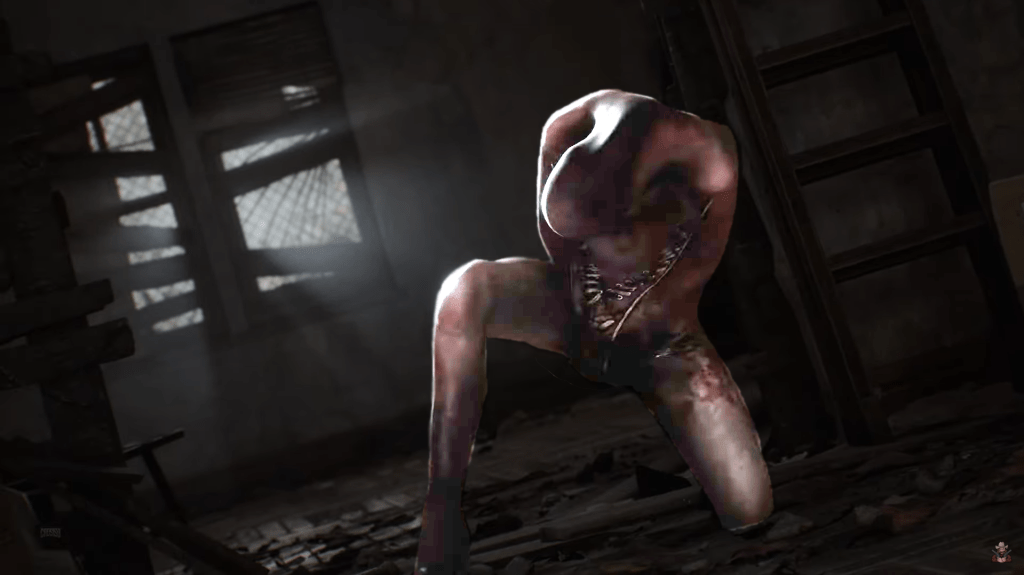
Early on, at a blood-streaked crossroad, a writhing figure stumbles out of the mist. Bound in what looks like a fleshy straitjacket, it can do nothing but lunge, twist, and spit.
It is your first enemy encounter, and if you’re anything like me, it’ll stay with you. But why, in a game renowned for its diverse monster design, is a straitjacket the first image of horror?
Straitjackets as Metaphor—and as Stigma
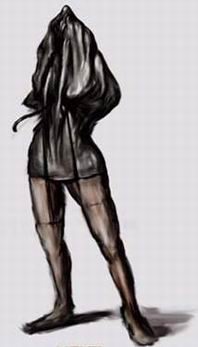
That first creature, known as the “Lying Figure,” in fact has a design based upon a body-bag, but its body still brings to mind a straitjacket: arms pinned, flesh fused, posture hunched.
At first glance, it reads as typical horror shorthand: the visual language of madness, violence, and fear. Straitjackets have long been used in popular culture to symbolise loss of control and violent insanity, often without compassion or context. Thinking back to games I’ve played, I remember the unnerving inmates of Outlast inhabiting Mount Massive Asylum, and the psychologically twisted moments of The Evil Within, where main character Detective Castellanos is strapped to a chair in order to access upgrades. There was even an enemy called The Straitjacket Henchman designed for Batman: Arkham Asylum that never made it to final development, but the idea was there.
But in Silent Hill 2, the symbolism goes deeper. After playing the game in full, I began to see the straitjacket not only as horror imagery, but as a mirror to James’ inner world. Like the Lying Figure, he is restrained. He is emotionally frozen, riddled with guilt, and unable to connect. The Lying Figure becomes more than a monster; it is a manifestation of James’ emotional repression and psychological entrapment.
A World That Tightens: Fog, Guilt, and the Architecture of Confinement
Even the game’s structure reinforces themes of restraint. There’s a rhythm: exploration in open streets followed by claustrophobic buildings. With each chapter, the environments grow darker, narrower, more suffocating. Early on, there’s ambient light, space, and visibility. Later, the corridors become pitch black. Your torch barely helps. Navigation feels like an act of desperation.
Yet the game encourages exploration. Every locked door; every dead-end hallway; every obtuse puzzle; all serve as metaphors for the ways in which James (and the player) are constrained, physically and mentally. The player can feel that James is confronting deeper and darker secrets as he looks for the truth behind his wife’s letter. The gameplay becomes a struggle against these restraints, mirroring James’ own internal fight to free himself from the guilt and sorrow that bind him.
Beyond the Asylum
In psychiatry, restraint is a complex and often difficult topic. It comes in many forms—mechanical (like straitjackets and straps); physical (using human force); chemical (sedation with drugs); and even seclusion (isolation in a locked room). Historically, straitjackets were seen as a more ‘humane’ alternative to chains or multiple staff holding someone down. Over time, they’ve come to symbolise coercion. Restraint continues to be used in modern psychiatric practice, though any form of restraint is ideally a last resort, meant to be used only when there’s an immediate and serious risk that can’t be managed another way.
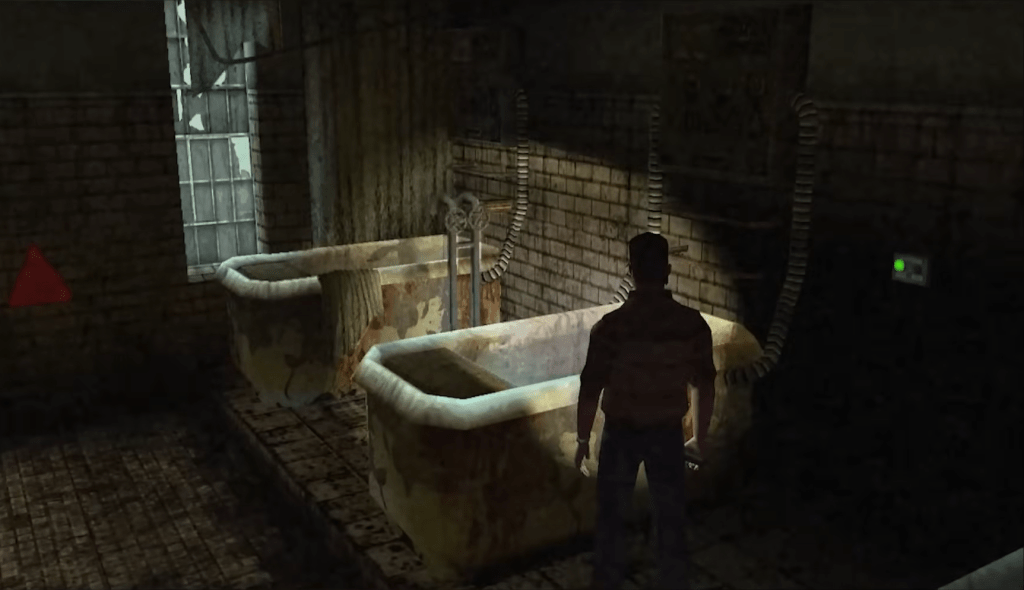
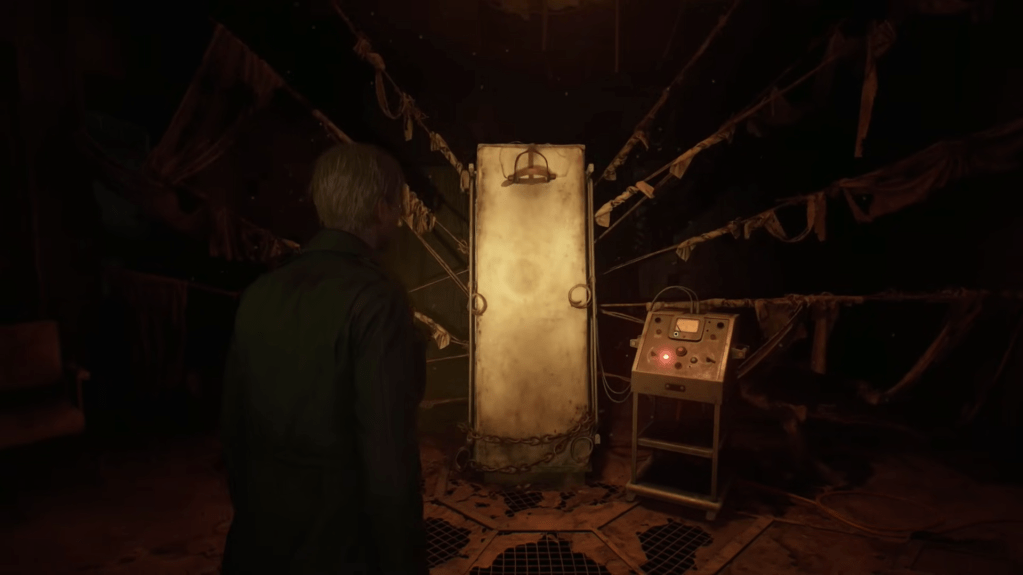
Silent Hill 2’s use of Brookhaven Hospital, a psychiatric institution, further explores the theme of restraint. It shows a room used for an extreme vision of hydrotherapy, with leather straps on the edges of baths keep patients tied down. There’s a room with a historic depiction of an electroconvulsive therapy device, with arm and leg straps. Through these environments, the game nods at how mechanical restraint has historically been intertwined with the treatment of mental illness. In the context of the game’s narrative, these settings show physical and psychological confinement as inseparable aspects of human suffering.
Horror or Harm?
Turning restraint into a literal monster can be problematic. For those with lived experience, it risks turning trauma into a trope. Patients have mixed views regarding restraint. One study found some patients calling it helpful (“I thought I was in heaven, feeling much better when I was restrained… I was safe”), while more had a negative experience (“It was like shock treatment, punishment and deprivation of liberty, nothing good in it”).
Simplifying complex realities into jump scares can perpetuate stigma, particularly when restraint is associated with “madness” or violence.
This matters because mental health stigma doesn’t just exist in media—it affects real lives. It can discourage people from seeking help, isolate those who are struggling, and reinforce harmful myths about danger or unpredictability. When media leans into fear without nuance, it adds to a culture that marginalises those with mental illness.
At the same time, Silent Hill 2 challenges this trope by complicating the simple narrative of horror. The Lying Figure, though terrifying, is not just a monster in the traditional sense. It is trapped, just like James, a symbol of suffering and restriction. The straitjacket it wears isn’t just a costume—it’s a part of the character, one that speaks to the difficulty of escaping both external and internal forms of restraint.
Horror as Healing
In Silent Hill 2, restraint is more than a tool for horror; it is a central thematic device. The monsters are manifestations of both physical and psychological restraint, and through them, the game invites players to reflect on the nature of suffering, isolation, and confinement. While the game’s use of restraint may risk simplifying the complex realities of mental health, it also offers a thought-provoking exploration of what it means to be trapped—whether by guilt, grief, memory, or external forces.
By the end of the game, players are left with a choice: to guide James toward healing or to allow him to remain trapped in despair. What exactly James is healing from is revealed gradually and obliquely, mirroring how people often come to terms with difficult emotions in real life. His journey isn’t a clear-cut battle between good and evil—it’s a deeply personal reckoning with internal restraint: the kind that comes from unspoken emotions, painful memories, and unresolved truths.
Silent Hill 2 is a haunting experience that challenges traditional horror narratives. With its depiction of restraint, it offers a powerful meditation on what it means to be bound—physically and psychologically—and how we, as individuals and as a society, might begin to understand the pain of those who feel trapped.


 Gaming the Mind
Leave a comment