
By Lakshya Gopal, medical student. Opinion pieces do not necessarily reflect the views of the charity.
Studies show that staying connected to others is key to mental wellbeing, so it’s healthy to maintain strong social relationships. One important process within social relationships that psychologists talk about is called “co-regulation.”
That’s the process by which two people influence each other’s emotional states in real-time, helping one another stay calm, connected, and emotionally balanced. It’s a process we first learn in early childhood with caregivers, but it continues throughout our lives: in friendships, in romantic partnerships, and, maybe unexpectedly, even in co-op video games!
Recently, I experienced a subtly meaningful example of co-regulation while playing Split Fiction, the newest narrative co-op game from Hazelight. Known for their emotionally rich storytelling and inventive co-op mechanics (It Takes Two, A Way Out), Hazelight returns with a game that combines escapism with an invitation to play together and support each other.
A game that brings you together
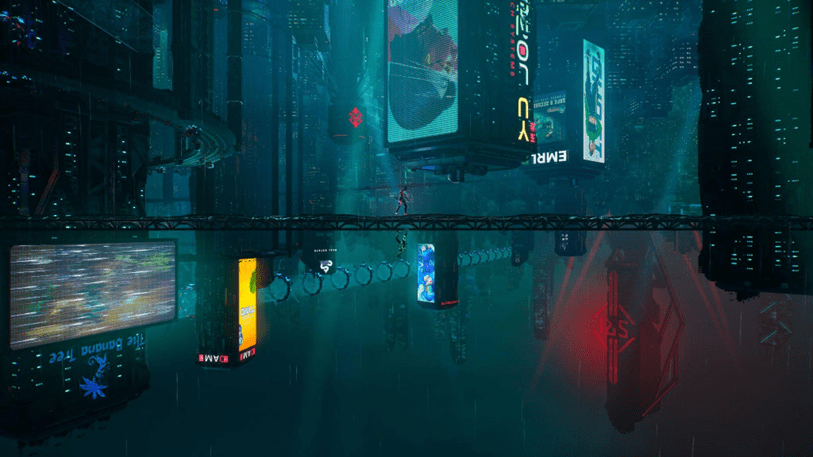
Split Fiction places you and your co-player in the roles of Mio and Zoe, two unpublished authors both invited by a shadowy publishing company to take part in a technological project where they can live through a simulation of their story ideas in real time. It doesn’t take long until both Mio and Zoe become stuck inside the simulations of their own story worlds, while connected to each other through the same machine. This results in gameplay that alternates between Mio’s action-orientated sci-fi stories, and Zoe’s whimsical fantasy worlds. While the plot is beyond today’s reality, the gameplay felt grounded in something very human.
For me, the magic was in the process. I played with someone close to me, and I noticed how often we’d naturally start syncing our decisions, intuitively offering help before being asked, and seamlessly using our skills together to progress. There were times we failed a challenge and laughed; times we misread each other’s cues and had to re-strategize. But through it all, there was this “co-regulation”: a sense that we were co-managing not just the game, but our own little emotional bubble.
Co-regulation: more than just teamwork
Co-regulation isn’t just as simple as working together. It’s about noticing how someone else is feeling, staying steady yourself, and helping them feel more balanced and supported. In a game, this might mean choosing to have patience if your co-player is struggling, so that they have safe space to try again. In clinical psychology, this kind of supportive behaviour is known to underpin resilience, empathy, and emotional safety.
Split Fiction’s gameplay, as with other narrative games requiring cooperative input from other players, provides an environment to practice co-regulation through a digital story. You’re not just syncing with your partner’s actions; you’re reacting to their emotions: when they hesitate; when they get frustrated; when they hold quiet joy after nailing a tricky section. This responsiveness mirrors how co-regulation works in real life: it’s about being emotionally available, flexible, and attuned.
At one point in the game, me and my co-op buddy had to navigate a level where Zoe’s fantasy world was full of colour and movement, while Mio’s was mechanical, rigid, and muted. The puzzle required us to move through these contrasting worlds at the same time, seeing how each world shaped the other, and running through the separate worlds to survive an intense boss fight. It was a stunning metaphor for emotional contrast in real relationships. One of us was impulsive, the other cautious; one confident, the other unsure. We failed many times on both sides. The level relied on us being balanced and coordinated, as we both had to adapt to each other’s environments at the same time, whilst also helping each other with our unique skills.

Even simple design choices encourage co-regulation, like the ability to sit on a bench and chat, or quick side stories and fun challenges that offer a break from the main plot. The game makes space for you to pause and feel, rather than pushing you ahead. And those pauses mattered. They helped me check in with my co-player and discuss what had just happened in the game. That was when we soaked in the beautiful environments, appreciating the depth of the scenery, joking about the dialogue and predicting what would come next. It was nice to have moments in the game for us to listen to each other and be listened to.

Why this matters (and why I loved it)
So yes, Split Fiction is gorgeous, inventive, and fun. Its narrative is touching and its gameplay clever. But for me, it stood out most because it reminded me how good it can feel to be in sync with someone else.
Playing Split Fiction reminded me that connection is more than just spending time together: it’s about how we shape and are shaped by each other’s emotional states. There’s something refreshing about a game that makes you rely on others. A game that quietly says: “You are not alone”. And in doing so, the game can model something deeper: the kind of co-regulation that helps relationships thrive. And honestly, that feels really good.
Whether you’re playing side-by-side on the couch or connecting over a call, Split Fiction offers space to co-create, co-struggle, and co-regulate.
Split Fiction is a subtle reminder of how good it can feel to share a moment, a challenge, and a story with someone else; and how small acts of connection might matter more than we realise.


 Gaming the Mind
Leave a comment